N+1 is the standard expression to describe the number of bikes you need to have. Of course the unknown in this equation is N. Informal enquiries of fellow members of my cycling club indicate that anything between 5 and 10 is reasonably common. I’m my case N=1 and that clearly put me 3 standard deviations from the mean.
In addition to any feelings of inadequacy from a bike ownership perspective being an N=1 person means that I need to keep on top of bike maintenance to ensure my regular riding is not curtailed by a mechanical issue. I tend to keep a small stock of consumables such as tyres, tubes, brake blocks and cables so I can carry out repairs immediately without having to go to my LBS or wait for an online purchase to be delivered.
I am not one to shirk bad weather so that means my poor steed can take quite a beating at this time of year. Riding small lanes that are free of traffic has the drawback that they are typically very mucky and this is no good from a wear and tear perspective.
I have long heard stories of people wearing out rims but I had assumed this was something that happened to old salts who rode their wheels into the ground over many years. It didn’t occur to me that I have been riding my current wheels for 5 years. Last month after a week of particularly bad weather I noticed that a new set of brake pads had warn down down to almost nothing, alarmingly quickly.


This made me think about the state of my rims so rather aimlessly I thought to give them a closer inspection. I was quite alarmed to find that just with the tips of my fingers I could feel that they were slightly concave.
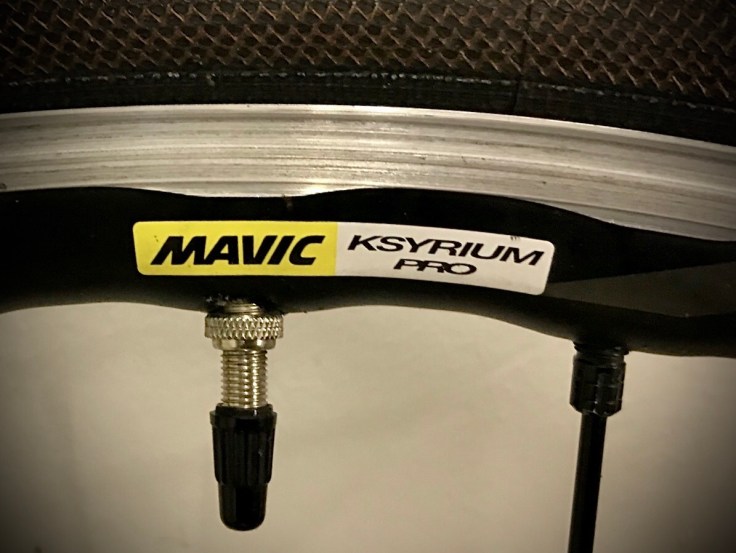
At this point I set out to find a more scientific test to measure the wear on my rims. I expected to find a clever gauge or measuring device designed just for the purpose. In the cycling world these seems to be a tool for everything but not in this case it seems.
So failing anything better I resorted to laying a straight edge across the rim. As you will see from the photos there was clearly some wear evidenced from the fact that the centre of of brake track was warn down more than the inner and outer edges. It is difficult to measure but from eye I would guess it had easily worn by about 1mm.
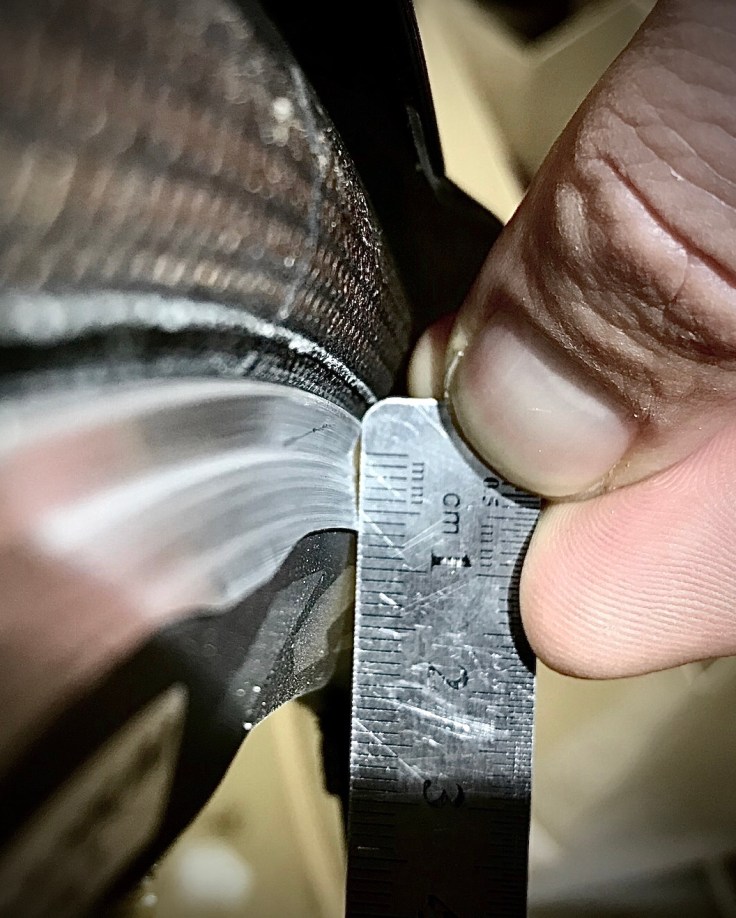
So how bad is that I thought?
I called Mavic customer service (they are mavic wheels) and spoke to a nice chap with a great french accent. I took some comfort from the conversation initially, it seems there is no specific gauge to measure rim wear and the customary method is to lay a straight edge across the brake track just as I had done. However the next bit was more alarming, the guy on the customer service line suggested that anything over 0.3mm and I should replace the rims.
Gulp!
Even allowing for some safety factor in this number and my inaccurate measurement 1mm is still very different from 0.3mm.
Time for new rims methinks.
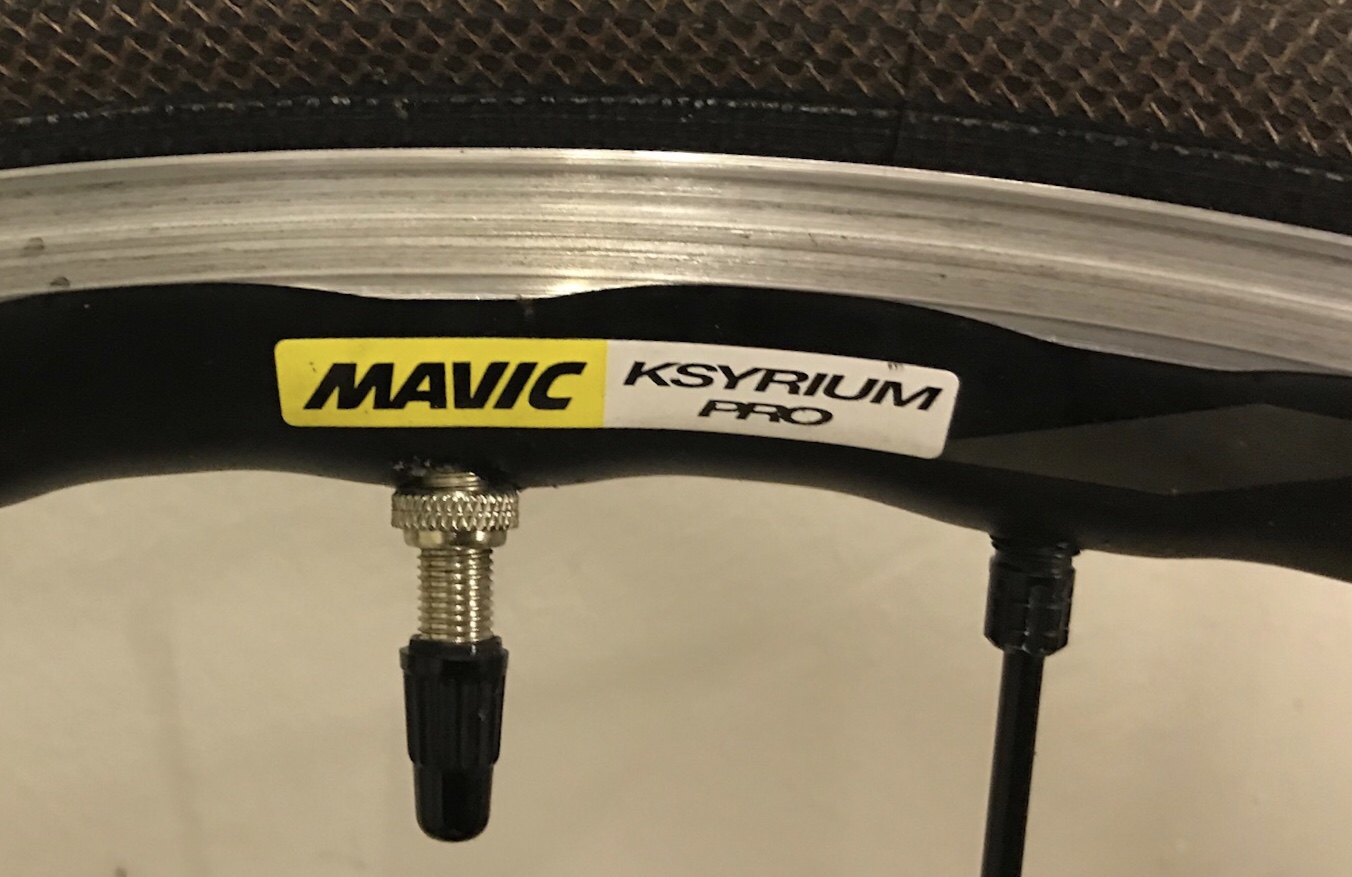
Being an N=1 person having to have wheels rebuild meant that I was going to be off the road for a while. The wheels in question are also (for me) expensive Mavic Ksyrium Pro wheels and the thought of having new rims every few years was not appealing so the clear solution to both issues was to do what every other self respecting cyclist does an get a pair of cheaper winter wheels. So that was easy, trip to LBS and I returned with a pair of Mavic Aksum wheels. A few minutes with a chain whip and I was back in business with some “safe” wheels.
Now to the rims on the Ksyrium
This was not as simple as I thought. My LBS were surprisingly not interested in rebuilding the wheels, their rational was that the cost would be sufficiently close to that of a new wheel that it was not worth doing. Hmm.
I tried my local bike mechanic. He confirmed it would be expensive, as he would recommend new spokes as well, however the main issue was that he was not Mavic authorised and hence could not source the required parts. Agh.
So, last resort, I contacted Mavic. No problem they said, within 24 hours they emailed me a quote (£200 per wheel, eek) and a UPS postage label. So what do you do, it is not a cheap repair but these wheels have an MSRP of £800 and you perhaps can get them for £650 discounted so the repair does make sense.
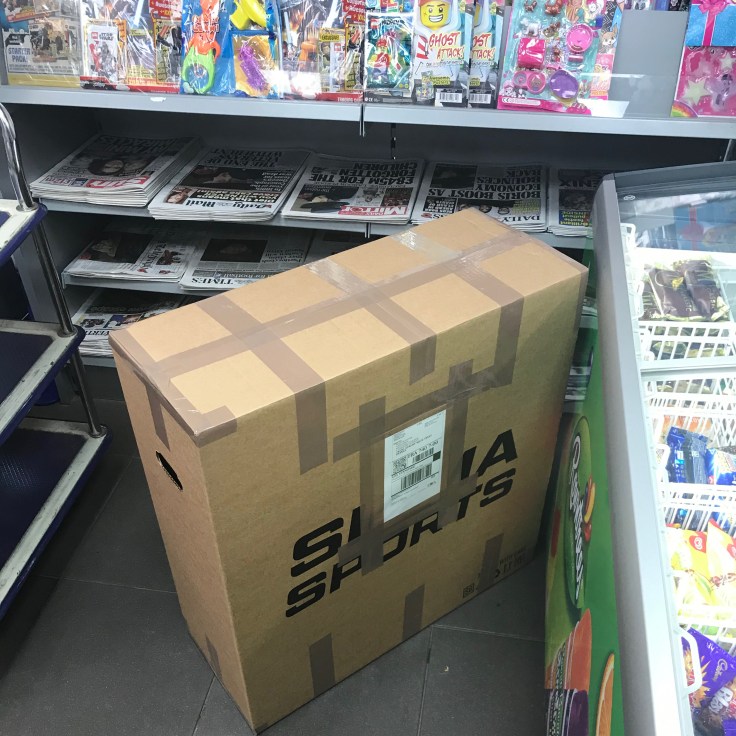
Fortunate my LBS were very kind and supplied me with a wheel specific cardboard box FOC so I could safely package them up for shipment.
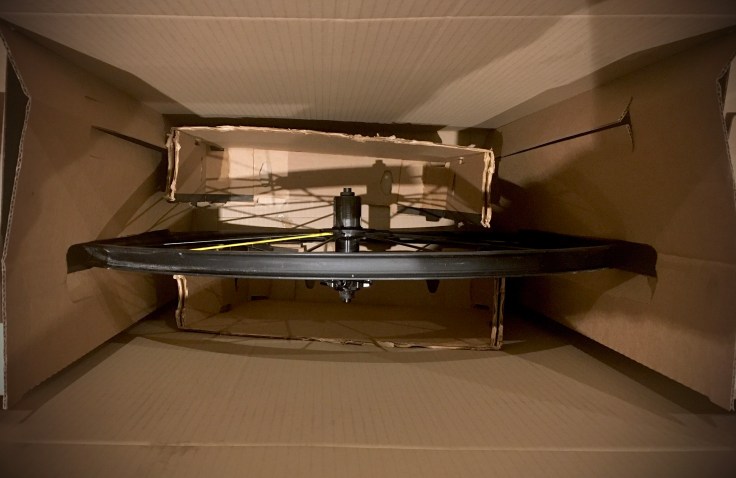
The deal with the UPS label is that you drop off your package at a local pick up point. In my case a small local convenience store. I was slightly concerned that after checking the package in the guy just left them in the store near the magazine rack. I had visions of them being stolen before then UPS guy arrived but what do you do. It was 24 hours before they were collected but in another 24 hours they were back at Mavic HQ in France and I could sleep more comfortably.
About a week later I was aimlessly wondering about my wheels again, I knew from the UPS shipment tracker that they had reached Mavic but had no other news. I resolved to drop them an emails when I got home in the evening. I didn’t need to, they had been delivered that day.
New rims, new spokes, hubs cleaned and serviced, good as new. The service from Mavic was great, even if the shipping arrangements were a little scary, and the turnaround time exceptional considering they went to France and back. I don’t think my LBS or local mechanical would have been practically any quicker.
So the “new” Ksyrium’s are now in the garage awaiting the spring and the Aksium’s are taking on the punishing winter rides.
QED, I just wish I had discovered “winter wheels” a bit sooner.
 rideupgrades
Leave a comment